
Meet Júlio Valente: the man chosen by Moraes, Fachin and Barroso to run vote totaling at the TSE and head the room Flávio Bolsonaro says PL monitors were removed from
27/10/2026 · 23 min de leitura
On the night of the runoff, Flávio Bolsonaro said PL election monitors were removed from the TSE vault room. The man in charge of the TSE's IT department and of vote totaling is Júlio Valente. Here is how he got there.
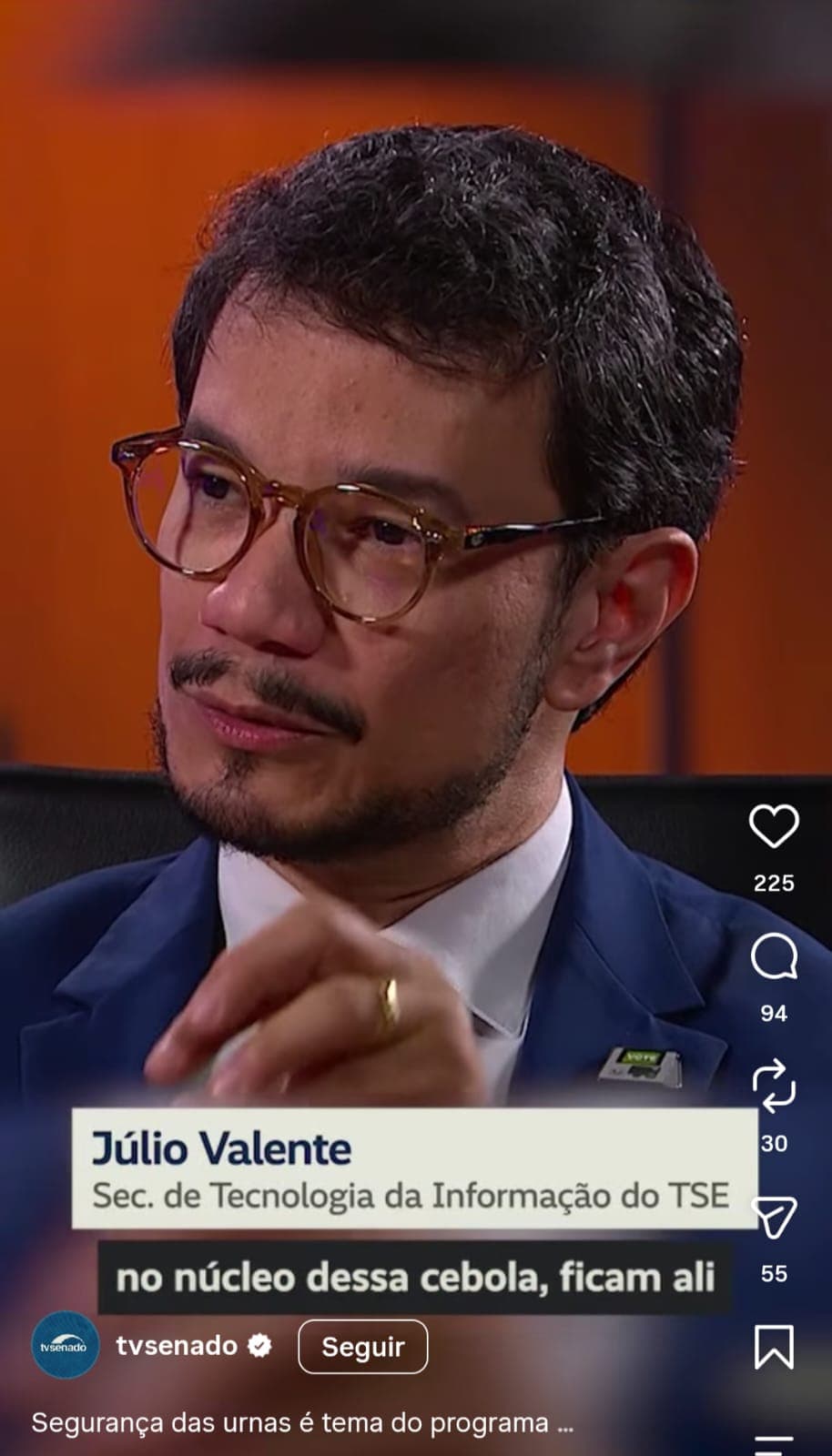
On the night Flávio Bolsonaro refused to accept the runoff result, he charged that PL election monitors had been removed from the TSE's vault room (the "sala-cofre"). The man who runs the IT Secretariat (STI) and vote totaling at that Court is named Júlio Valente.
Monitors out, totaling inside
On the night of October 25, 2026, after the runoff result was proclaimed, Flávio Bolsonaro (PL) did not recognize the outcome and said he will ask for the election to be annulled. In the same statement, he dropped the detail few people were saying out loud:
"Our PL monitors were removed from inside the vault room from the moment the decision was made. So there is a lot that needs to be clarified before Brazil simply accepts this dirty trick that just happened in these elections."
Sources with the video and the statement:
The TSE answered with a note saying the "vault room" is not open to visitors and that PL monitors had followed the totaling from another area. Translation: the Court itself admits there is a closed space at the heart of the count, and it is arguing with the defeated candidate over who could be where at the moment of counting.
Who is responsible for the TSE's Information Technology Secretariat, for vote totaling and for the release of results? Júlio Valente da Costa Junior. He has held the post since May 2021. Since 2009 he had already been head of the Totaling Section (Setot). The room Brazil calls the vault room or the totaling room is his operational territory.
Júlio Valente da Costa Junior is not a justice. He does not appear on magazine covers. He does not give speeches in the plenary. He runs the machine.

Since May 11, 2021, he has been Secretary of Information Technology at the Superior Electoral Court, the post that commands the STI, the department in charge of the systems that total and publish election results. Before that, since 2009, he headed the Results Totaling and Release Section (Setot): the technical core that adds up what Brazil votes.
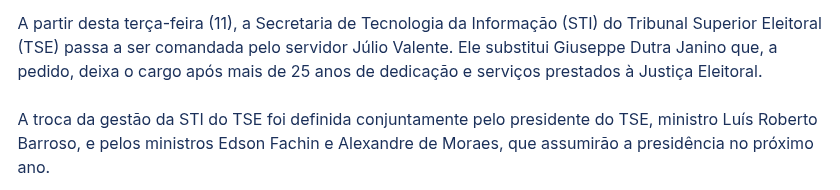
The changing of the guard was announced by the TSE itself. Valente replaced Giuseppe Dutra Janino, the so-called "father of the voting machines," after 15 years at the head of the STI. According to the Court, the change was decided jointly by then-president Luís Roberto Barroso and justices Edson Fachin and Alexandre de Moraes, the two who would go on to take over the TSE presidency.
Source: TSE, appointment of Júlio Valente
This org chart matters. In practice, Valente answers for the digital infrastructure of electronic voting in the most populous country in Latin America. And when the PL tried to challenge the 2022 runoff, it was the technical opinion signed by this same secretary that Alexandre de Moraes used to rebut the party and to impose a fine of about R$ 22.9 million for bad-faith litigation.
Official documents, published contracts, testimony before a congressional inquiry (CPI), a criminal complaint on file, reporting on a hacker intrusion, and public posts by Valente himself and by the circle he moves in. Blind trust in him is a luxury Brazil can no longer afford.
The résumé the TSE sells and what it leaves out
The TSE presents Valente as a career civil servant: more than 25 years in the Electoral Justice system, 13 of them at the STI. Setot since 2009. The top job in 2021.
The official narrative is one of technical continuity. The swap of Janino for Valente came at the height of the debate over auditable voting. O Globo reported at the time that TSE sources denied any link between Janino's exit and the pressure for printed ballots, and pointed instead to wear and tear after problems in the 2020 municipal elections.
Fact: the man who took over the STI in 2021 had already been the totaling man for more than a decade. Fact: the transition kept Janino inside the Court, as special adviser to the Presidency, to "assist" the handover. Fact: since Valente reached the top IT post, the opposition to the electronic system, and anyone who dared to challenge it with a case at the TSE, has found the secretary serving as the technical piece of the institutional response.
The secretary's Facebook: Marx and Felipe Neto
Before the post, there was already a public trail.
In a Facebook post, Júlio Valente shares quotes from Karl Marx, with the philosopher's classic portrait, about capital, greed and the reduction of human life to accumulation.
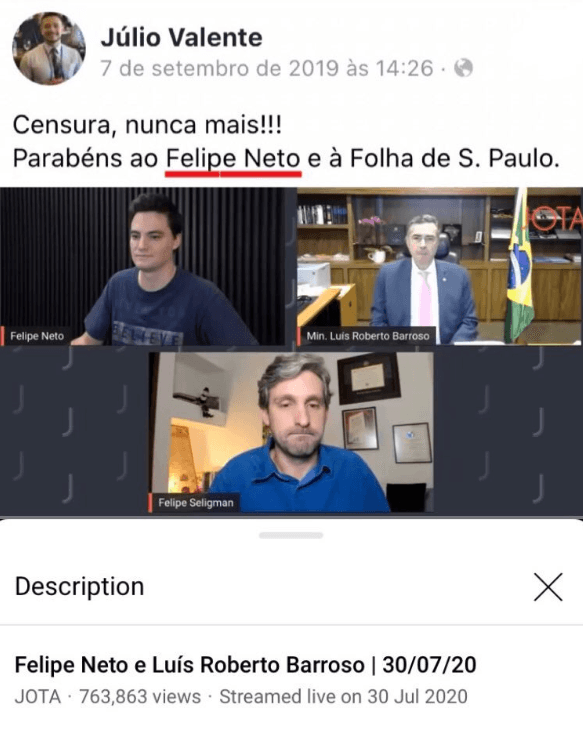
In another post, dated September 7, 2019, Valente writes: "Censorship, never again!!! Congratulations to Felipe Neto and Folha de S. Paulo." The screenshot pairs the post with a frame of Felipe Neto alongside Justice Luís Roberto Barroso in a JOTA broadcast.
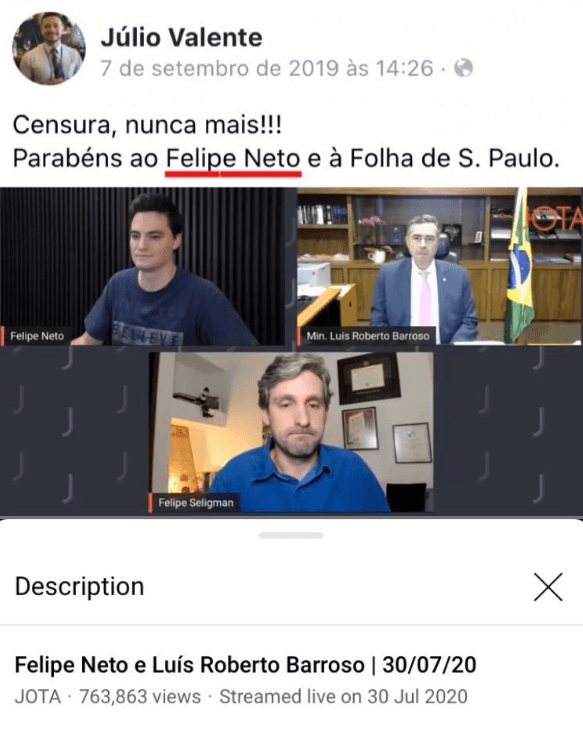
These are the civil servant's own posts. The same civil servant who, years later, signs technical opinions used to crush opposition cases about the voting machines. The same civil servant who, in August 2022, hosts influencers in the "totaling room" and explains to the country that "nobody here is adding up votes."
The question is whether the country accepts, without scrutiny, that the chief operator of vote totaling is at the same time a public voice aligned with the camp that fights the right on social media and the technical piece of the justice who fines anyone who questions the system.
Witness for the system: the R$ 22.9 million fine
In November 2022, the PL requested an extraordinary verification and the invalidation of votes from hundreds of thousands of pre-2020 model voting machines in the runoff. Alexandre de Moraes, then president of the TSE, denied the request and fined the coalition about R$ 22.9 million for bad-faith litigation.
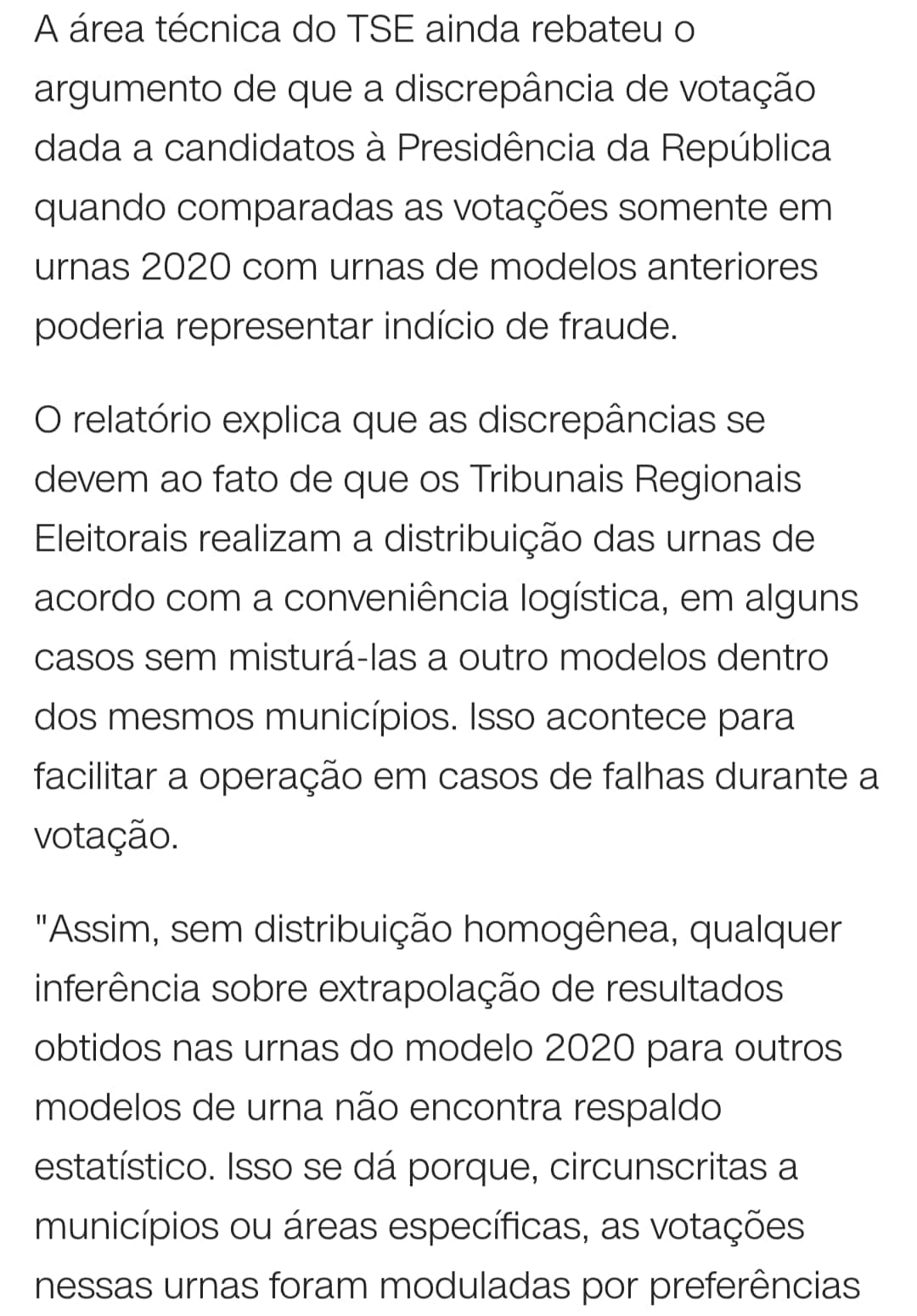
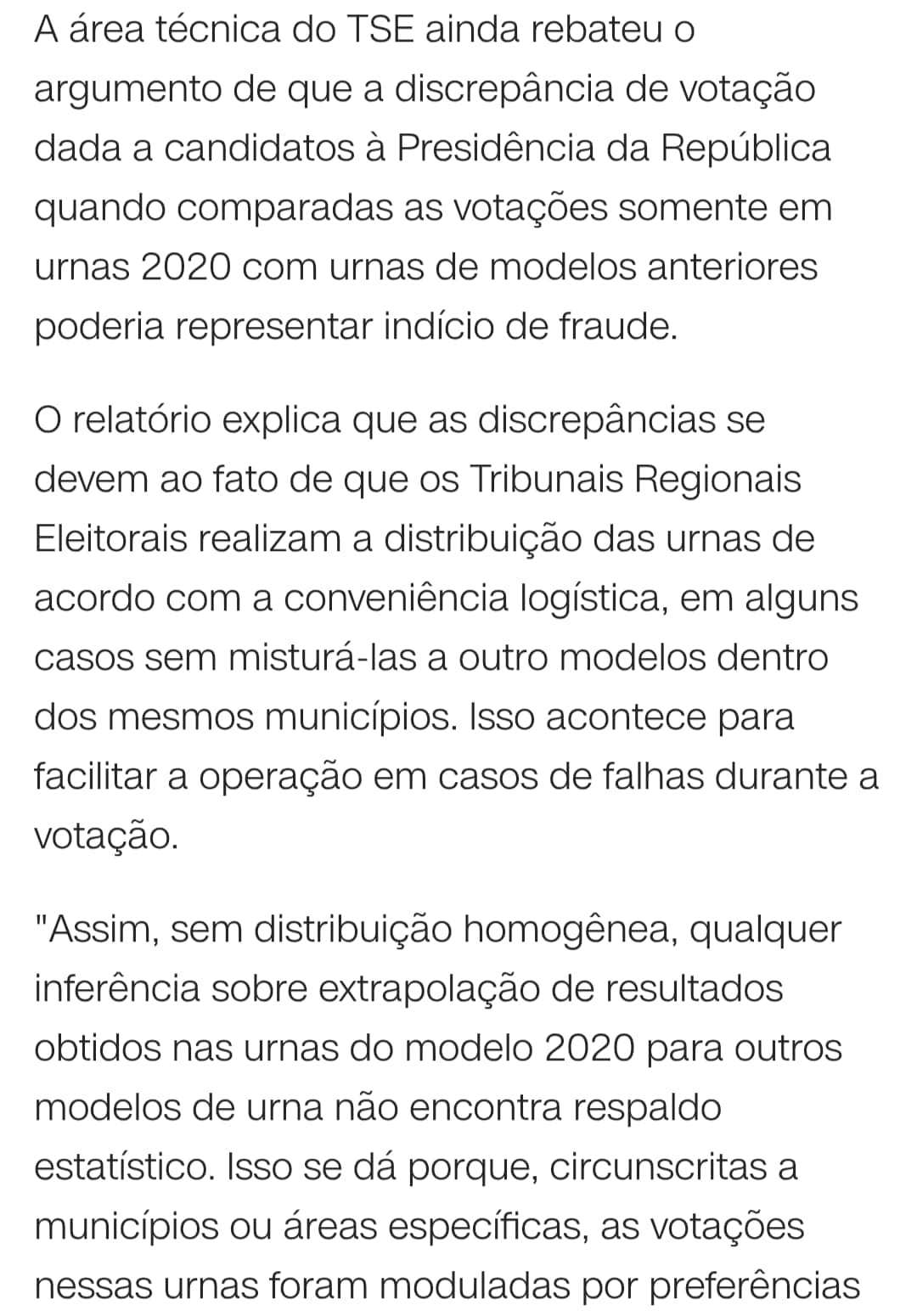
The decision did not come out of nowhere. Moraes relied on an STI opinion. Reporting by CNN and Estadão records that the technical report signed by Júlio Valente da Costa Júnior classified the PL's arguments as "unequivocally" false and rebutted, point by point, the claims about machine identification, secrecy and discrepancies between models.
Sources:
The justice who concentrates exceptional powers in electoral litigation uses, as his technical anchor, the secretary who operates the totaling. Whoever questions the system faces the judge and the report of the system's own operator. The institution under scrutiny supplies the "technical truth" that condemns whoever questions it.
And Valente does not appear only on paper. A screenshot from the STF shows Julio Cesar Valente da Costa Junior listed among the witnesses heard in the group of cases under Moraes as rapporteur.
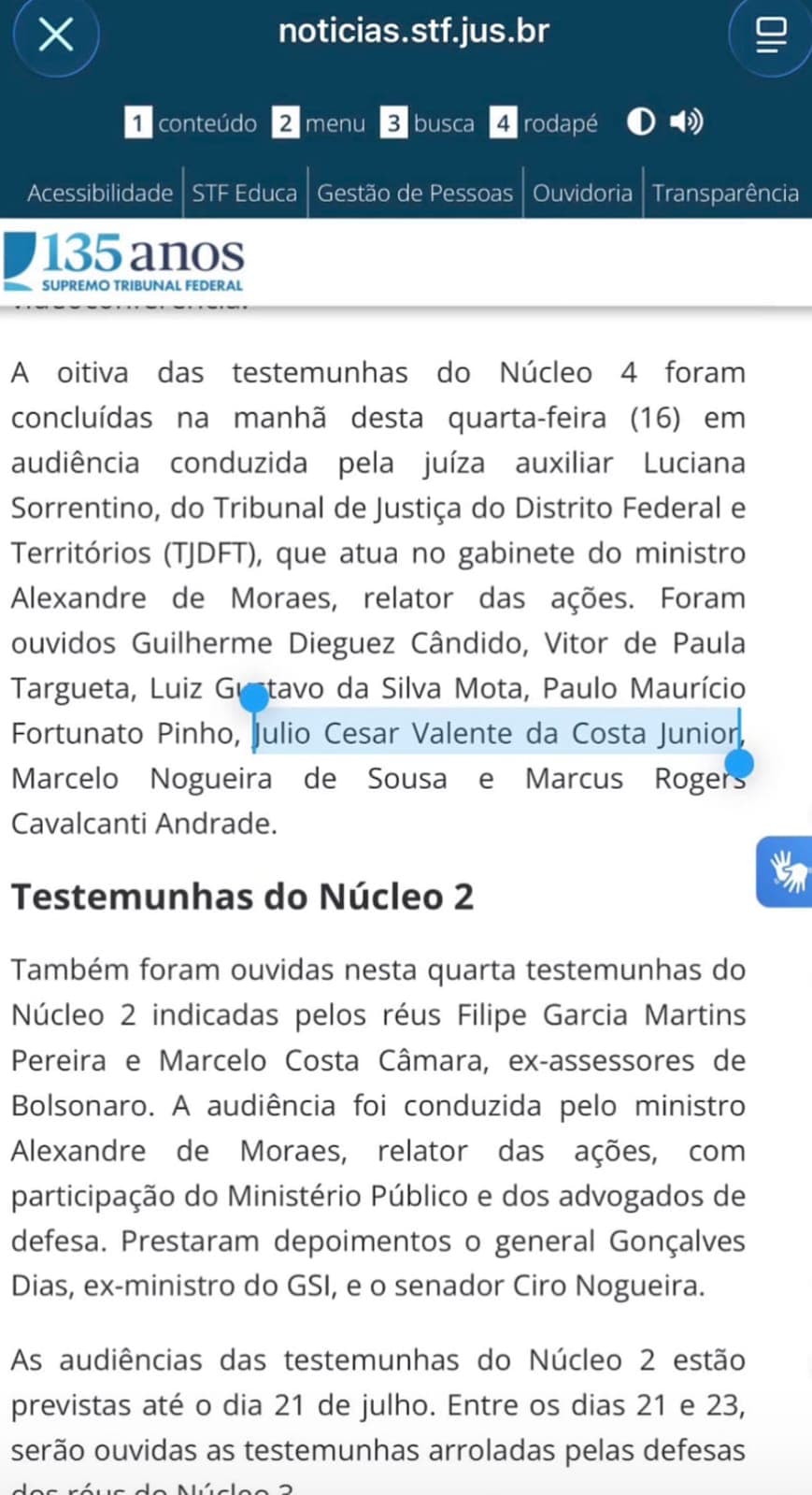
Source: STF, hearing of Group 4 witnesses (07/16/2025)
Janino: the shadow who coached the transition
Valente inherited the machine from Giuseppe Janino. According to the TSE itself, Janino stayed on for the transition.
Janino is the recurring character of two decades of controversy over the voting machine. In 2015, at the Cyber Crimes CPI in the Chamber of Deputies, he faced off with lawyer Maria Aparecida Cortiz over the "Inserator" and the security of the system. The secretary played down the risks; the critics pointed to executables and audit failures.
Source: Agência Câmara, Janino and the Inserator
The criminal complaint: false testimony and Smartmatic "just moving boxes"
In June 2018, the Convergências coalition filed a notitia criminis against Giuseppe Dutra Janino, accusing him of false testimony before the CPI (art. 4, II, Law 1,579/52). The document is publicly available.
Source: NOTICIA-CRIME-FINALIZADO.pdf (Convergências)
Main points of the complaint (faithful summary of the document):
Smartmatic was not "just transport." At the CPI, Janino allegedly reduced the company's role to logistics and moving voting machine cases. The contract and audits point to training of technicians, preparation, software loading and access to critical moments. The complaint attaches the TSE/Smartmatic contract and cites an audit report (ITA/CMind/USP etc.) on vulnerabilities and insiders.
Inserator. Janino allegedly claimed it could not be used in a compromising way; the complaint counters with audit excerpts and Cortiz's testimony about an executable/compilable program.
Printer module / print-ready machines. Contradictions between Janino's statements in the Senate (March 2018) about the existence and cost of a printer module and business demonstrations (Quattro), plus the record of purchases of print-ready machines.
Request: opening of an inquiry for false testimony before a CPI.
Valente's immediate predecessor was formally accused, with documents attached, of lying to Congress about the system Valente now runs. The defense line "Smartmatic only carries boxes" is exactly what the complaint calls false.
The hacker who got into the TSE network
In 2018, in the middle of the presidential election, a hacker got into the TSE's systems and said he stayed inside from April to September. The court itself called in the Federal Police, and the case became inquiry 1,361. TecMundo received an email from the intruder claiming remote exploitation, source code, documents and credentials tied to the top IT leadership.
Source: Folha de S.Paulo

Gazeta do Povo detailed the inquiry revealed by Bolsonaro in 2021: an internal STI report, access to Gedai-UE (the system that prepares the voting machines' media), weak passwords, compromised machines at regional electoral courts (TREs), IP addresses abroad.
Source: Gazeta do Povo
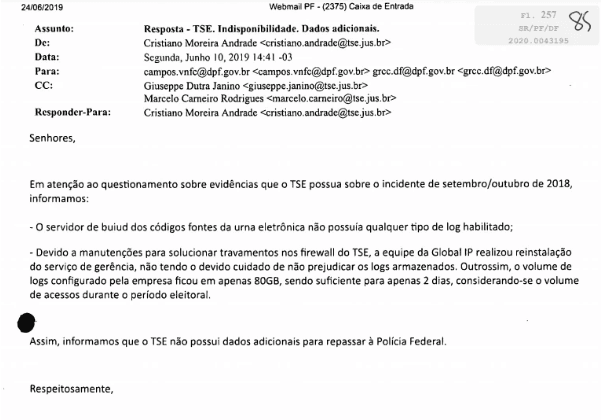
When the Federal Police asked for the traces, the TSE's answer was a one-page email dated June 10, 2019. The server that compiles the voting machine's source code "did not have any type of log enabled." The firewall records were lost because the contracted company reinstalled the system "without taking due care not to harm the stored logs." And the court closed with: "the TSE has no additional data to pass on to the Federal Police." To this day nobody knows how the intruder got in, what he took or what he touched.
Source: Pleno.News: https://pleno.news/brasil/politica-nacional/registros-virtuais-de-invasao-ao-sistema-do-tse-foram-perdidos.html
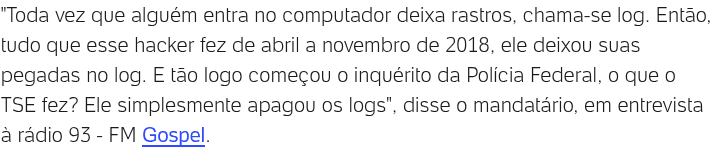
Bolsonaro made the inquiry public and summed it up: "the TSE simply erased the logs." He compared it to a forensic expert wiping the fingerprints off a crime scene.
Source: UOL
Janino, then secretary, forwarded material to the Federal Police and produced a technical report admitting improper access to Gedai-UE code and credentials. The TSE later stated that the integrity of the 2018 elections was not compromised. Expert Diego Aranha, interviewed by Gazeta, called the intrusion serious and criticized both the theory of an actual tampering and the TSE's stance of downplaying the leak of critical code.
The complaint and the audits it cites already spoke of a catastrophic risk from insiders. The hacker inquiry showed weak passwords, erased or insufficient logs, sensitive code that could be copied on the network. After all that, the official line remains the same: "no attack has ever succeeded."
Official propaganda avoids the question that matters:
If there is a team dedicated solely to cybersecurity "watching for attacks," it is because there is an attack surface. Voting machines and networks are systems. Systems have edges. And the most dangerous edge, in any serious architecture, is the insider threat: whoever already has a badge, a password, access to the build, access to media preparation, access to the room.
An outside attack is the convenient argument. The question that matters: what if it comes from inside?
The "dark room," the influencers and Redes Cordiais
On August 4, 2022, the TSE hosted about 30 digital influencers to tour the totaling room. The TSE's official article admits the visit was a partnership with the Redes Cordiais project, under the Permanent Program to Counter Disinformation. Valente appears in the article explaining that "nobody here is adding up votes" and that the room "was never secret."
Source: TSE, influencers in the totaling room
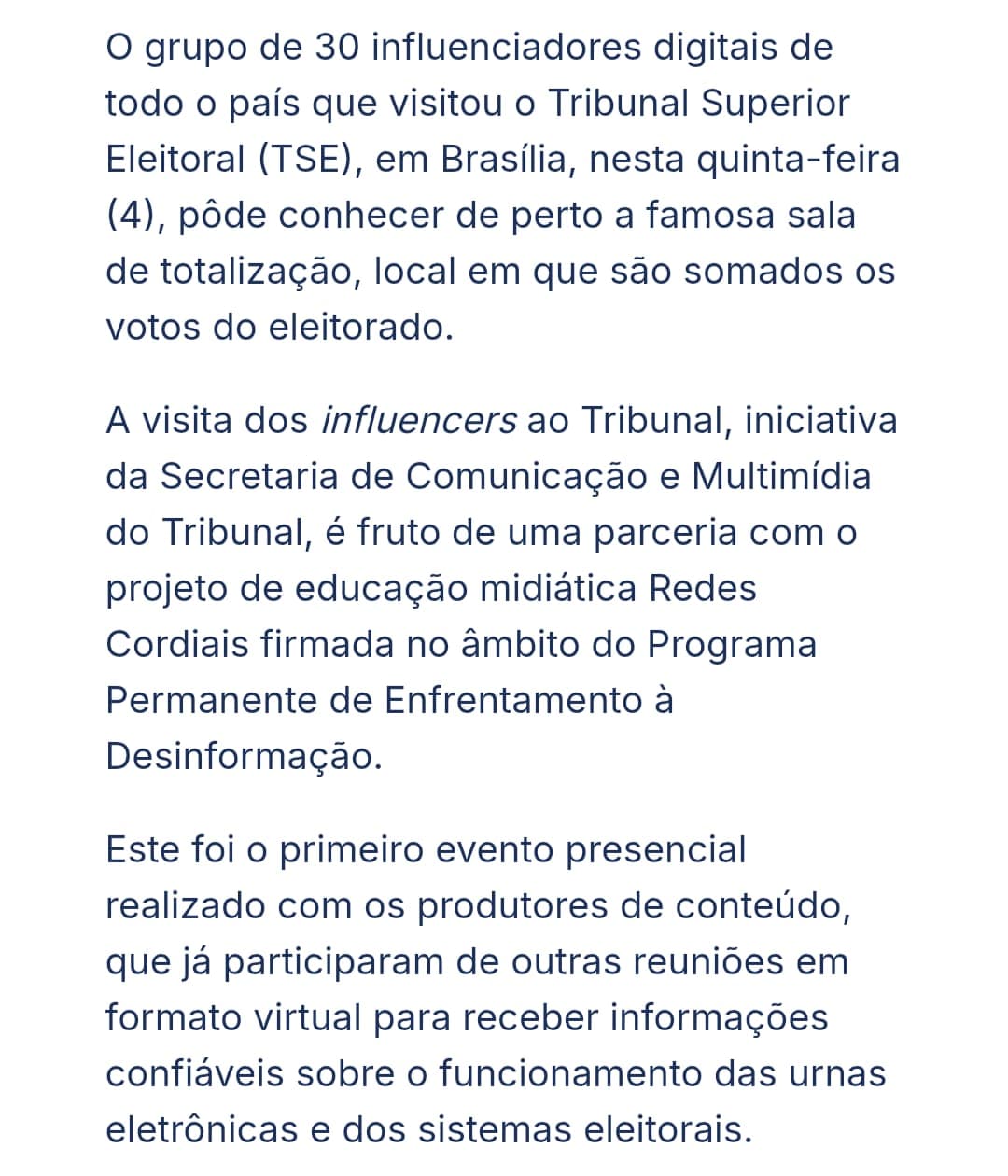

Look at the list. The curators picked creators aligned with the "fight against disinformation" discourse, the same umbrella under which the Court expanded its power over social media and narratives.
Redes Cordiais counts among its names journalist Guilherme Amado, a co-founder. The TSE and Redes Cordiais partnership works as a legitimation apparatus. The influencer walks in, films the bright room, goes back online saying the "dark room" rumor is dead. And the ordinary voter, on election Sunday, remains outside the "brain" of the count.
Source: Guilherme Amado, Redes Cordiais
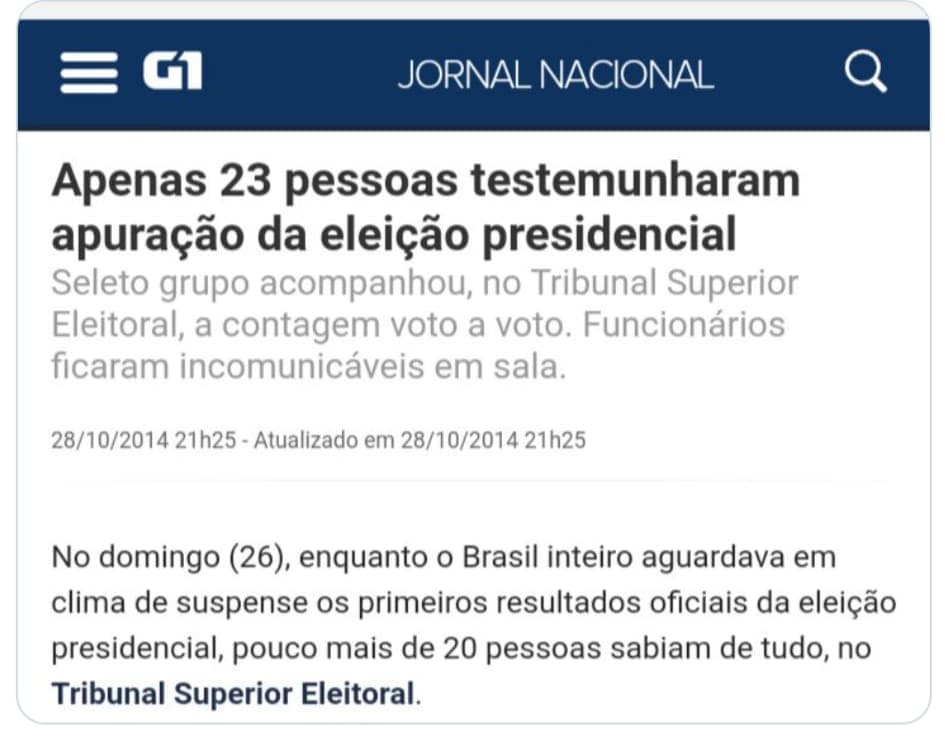
Recent reports follow the same humanizing script: a room with dozens of staff, restricted access, monitoring. In 2014, Jornal Nacional already noted the select nature of the count: just over 20 people "knew everything," staff cut off from outside contact.
Additional sources:
David Ágape, in testimony and reporting on the Twitter Files Brasil and Vaza Toga, describes the TSE's expansion as a piece of the "disinformation" fighting complex, with growing power over platforms and narrative. The guided influencer tour fits that picture: it does not audit any hash on Sunday; it trains spokespeople.
Sources:
"We are preparing the voting machines"
In interviews and official materials, the STI talks about preparing voting machines for remote areas and for voters abroad, about loading software, sealing, verification ceremonies.
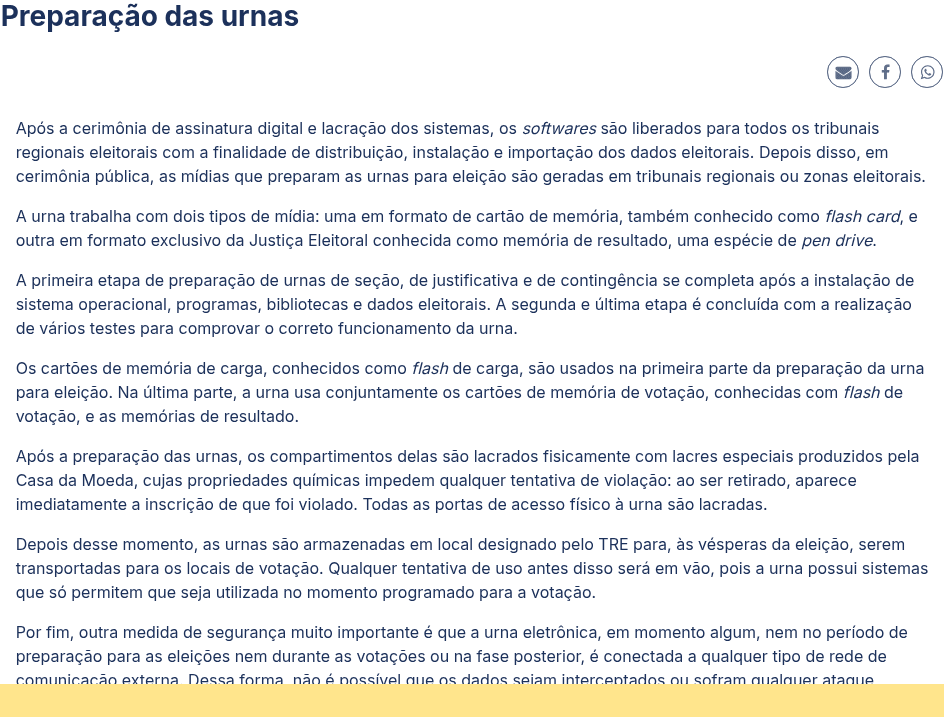
Source: TSE, Preparation of the voting machines
The question is always the same: who audits, from the outside, what was "prepared"? The voter sees the sealing theater. He does not see the build. He does not see the full media chain. He has no paper ballot to check against the bit.
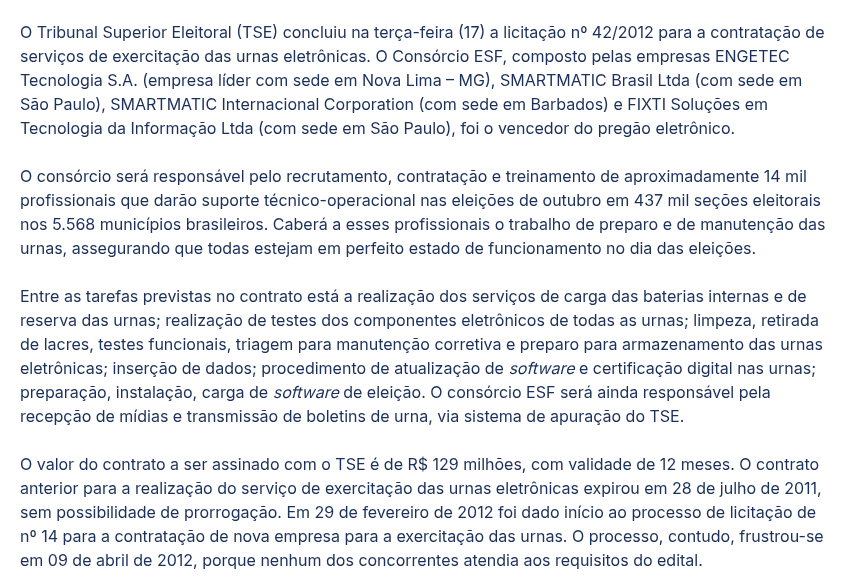
The Smartmatic maintenance and preparation contract (see the next section) makes it explicit: data entry, software updates, digital certification, loading of election software. "Preparing the voting machine" includes operating the election software.
The official narrative demands faith in internal procedure. Journalism demands documented doubt. Without independent end-to-end auditing and without a physical trail of the vote, "preparing" concentrates power.
Lula wants electronic voting machines for the world
At the G7, captured audio records Lula arguing that the UN should recommend electronic voting systems to other countries and citing his own electoral career "all through electronic voting."
Sources:
While established democracies keep auditable ballots or hybrid systems with paper, the Brazilian president exports the model the TSE calls untouchable. The paperless voting machine is an asset of the arrangement that elected and reelected him in the 21st century.
Smartmatic: the contract in the face of those who say "fake news"
For years, it was repeated that "talking about Smartmatic in Brazil is fake news." The complaint against Janino and the 2012 reports show something else: the company did enter the operational ecosystem of Brazilian elections, in the maintenance and preparation consortium (without building the voting machine "from scratch").
In July 2012, the ESF Consortium (Engetec + Smartmatic Brasil + Smartmatic Internacional + Fixti) won a TSE tender. Announced value: about R$ 129 million. Scope: recruit, hire and train about 14,000 professionals; preparation and maintenance; battery charging; testing; data entry; software updates and digital certification; preparation, installation and loading of election software.
Source: TSE, news of tender No. 42/2012
Sources:
The TSE's later note (2017) insists that Smartmatic did not supply the Brazilian voting machine nor program the software "of the elections" in the sense of replacing the Court's team; the 2014 contract was said to cover recruitment, training and operational support. Even that note admits thousands of professionals in preparation and maintenance.
Source: TSE, Smartmatic note
The 2018 complaint states that reducing this to "carrying boxes" was false testimony by Janino. We stand with the document and the contract: nobody hires a Venezuelan election technology company just to move furniture. Mass training and software loading are in the tender announcement.
International record
According to a dossier compiled from public sources (Wikipedia, DOJ, Miami Herald, NYT, AP):
Founded in 2000 by Venezuelan engineers (Antonio Mugica, Roger Piñate, Alfredo Anzola); pivoted to elections after 2000.
First major contract: Chávez's referendum, 2004.
Venezuela controversies (Bizta; Smartmatic's own 2017 claim that turnout was inflated in the Constituent Assembly vote).
Acquisition and sale of Sequoia in the US under CFIUS pressure.
DOJ indictments (2024, 2025) over a bribery scheme in the Philippines involving executives and the holding company SGO.
Operations in dozens of countries; in Brazil, the TSE admits operational support in election cycles of the 2010s.
The bridge between the Open Society and Smartmatic has a name and a title. Smartmatic is controlled by the holding company SGO Corporation Limited, based in London. In November 2014, Antonio Mugica (CEO and co-founder of Smartmatic) and Mark Malloch-Brown announced SGO. Malloch-Brown, former UN Deputy Secretary-General and former British minister, became chairman of SGO's board.
He chaired the board of Smartmatic's parent company from 2014 until December 4, 2020. On that day SGO itself announced that Malloch-Brown was stepping down because the Open Society Foundations, George Soros's network of foundations, had named him president. He was already a member of the Open Society's global board. He took over as president of the foundation in January 2021 and left in June 2024.
George Soros is not a Smartmatic shareholder. AP News and the company itself deny that version. The documented link is a different one: the man who chaired the board of Smartmatic's parent company for six years is the same man who later presided over Soros's Open Society. SGO confirms his exit from the board in the appointment statement.
Sources: SGO statement on Malloch-Brown leaving for the Open Society | SGO launch with Mugica and Malloch-Brown (2014) | Open Society announces Malloch-Brown as president | AP News, Soros does not own Smartmatic
Soros money in the "disinformation" ecosystem
The bridge between the Open Society and Smartmatic, through Mark Malloch-Brown, is only the front door. In Brazil, George Soros's Open Society Foundations pours in money at record scale. In 2023 alone it was at least US$ 31.3 million, about R$ 155.5 million, the largest amount the foundation has ever recorded in the country. In 2024 it was another US$ 28.4 million, about R$ 153.2 million. Since 2016, the Instituto Monte Castelo survey adds up to about R$ 781 million for 305 organizations.
Source: Gazeta do Povo, Soros transfers more than R$ 150 million to Brazilian NGOs in 2023
Source: Gazeta do Povo, Soros sent R$ 153 million to NGOs in Brazil in 2024
Source: Instituto Monte Castelo, Soros's payroll in Brazil
The most blatant case is Felipe Neto, celebrated by Júlio Valente. Instituto Vero, the YouTuber's NGO, received US$ 250,000 from the Open Society in 2021 to "fight disinformation," on the eve of the 2022 election. The record is in the foundation's own grants database. Felipe Neto himself confirmed it on social media: "Several other entities contributed, including George Soros's Open Society."
Source: Open Society, record of the grant to Instituto Vero
Source: Gazeta do Povo, STF hired former coordinator of Felipe Neto's NGO
The Soros-funded NGO entered the structure of the Electoral Justice system. The STF and the TSE held, in partnership with Instituto Vero, a seminar on disinformation with training for staff of the TSE, the TREs and the Electoral Public Prosecutor's Office. Later, the STF hired Victor Durigan, former coordinator at Vero, for the Court's anti-disinformation unit.
Source: STF, in partnership with STF and TSE, Instituto Vero brings lectures
Sleeping Giants Brasil, the group that pressures advertisers to choke right-wing outlets, received from the Open Society US$ 400,000 in 2022, US$ 700,000 in 2023 to "increase the accountability of online platforms in Brazil," another US$ 22,000 in 2023 and US$ 500,000 in 2024. Together with Instituto Vero, Sleeping Giants is part of the anti-disinformation network the STF partnered with.
Source: Open Society, grants to Sleeping Giants Brasil
Source: Gazeta do Povo, STF anti-disinformation program partners with left-wing groups
The money also reached those who study elections and social media. InternetLab received US$ 220,000 in 2018 described as "Core Support/Elections Project Support/2018-2021" and, between 2016 and 2021, received another US$ 620,000. Nossas, which does political mobilization, took US$ 4.1 million in 2024 alone. At the origin of the global fact-checking industry, First Draft, a network that trained fact-checkers and journalists, was born with funding from the Ford Foundation and the Open Society.
Source: Open Society, grants to InternetLab
Source: Open Society, grants to Nossas
Source: Gazeta do Povo, Sleeping Giants and Felipe Neto's institute benefit from US government money
The man who chaired the board of Smartmatic's parent company went on to preside over the Open Society. The Open Society funds Felipe Neto's NGO, celebrated by Júlio Valente, which trained Electoral Justice staff. Whoever funds the "fight against disinformation" ends up helping define what voters may question about the voting machine.
What Valente represents
The pieces:
The totaling man since 2009; IT secretary since 2021, chosen in the Barroso, Fachin, Moraes arrangement.
His own posts featuring Marx and celebrating Felipe Neto / "censorship, never again."
Posts and a public environment aligned with the camp that fights the right on social media.
A technical opinion used by Moraes to fine those who questioned the voting machines in 2022 about R$ 22.9 million; presence as a witness in the Moraes ecosystem.
Heir to Janino's STI, Janino being the target of a criminal complaint for false testimony before the CPI, including about Smartmatic.
A system that suffered an intrusion with access to critical code and serious log and password failures, and is still sold as airtight.
A legitimation operation with Redes Cordiais and influencers in the "room that was never secret," while the ordinary voter never gets in at counting time.
Smartmatic in the preparation and operational software contract, despite the "fake news" mantra.
Brazil was trained to treat doubt about the voting machine as thoughtcrime. Meanwhile, the IT secretary gives interviews, hosts influencers, signs opinions, testifies in the Moraes arrangement. And the code, the preparation and the totaling stay on the other side of the glass.
We do not forget who runs the machine.
What the complaint demands be read out loud
The Convergências filing is a notitia criminis with attachments: stenographic notes from the CPI (11/03/2015), a Senate hearing (03/13/2018), the special audit of the 2014 system (ITA, CMind, USP, IBP and independents), a letter from Quattro Eletrônica and TSE/Smartmatic contract No. 48/2014.
Source: NOTICIA-CRIME-FINALIZADO.pdf (Convergências)
In the PDF, passages jump out that Brazil needed to hear read out loud:
The contract clause providing for training of the contracting party's technicians, and the audit passage according to which Smartmatic employees would have access to critical moments of software loading and sealing.
The statement attributed to Cortiz at the CPI: Smartmatic loading voting machines in São Paulo, while Janino talked about "carrying boxes."
The audit report on the lack of design for independent external auditing; the absence of software certification to the international standards cited; the risk of insider attackers through compilers, certificates, BIOS, the compilation process.
The audit's sentence about "catastrophic/extremely serious" risks that could change results "without leaving traces."
The exchange between Lasier Martins and Janino about a printer module "that does not exist on the market" versus the business demonstration and the record of machines purchased for attachment.
The system Valente inherited was defended in Congress with statements that civil society itself, in a formal document, called lies.
Barroso, Fachin, Moraes: the political choice of the technician
The TSE's official note does not hide it: the swap of Janino for Valente was "jointly defined" by Barroso, Fachin and Moraes. Three Supreme Court names. Three names from the axis that led the electoral litigation and the "fight against disinformation" of 2021/2022.
Source: TSE, TSE President appoints Júlio Valente Secretary of Information Technology
There is a political choice in this appointment, made by a trio of justices at the height of the printed ballot war. Valente was the Setot (totaling) man and became the man of the entire STI. Continuity with Janino during the transition ensures the house method was not lost: only the sign on the door changed.
When Moraes, months later, uses Valente's opinion to fine the PL, the circle closes. Whoever chooses the secretary also judges whoever dares to doubt the secretary.
The verification theater
The TSE holds "verification events" for the totaling system. Valente appears in official articles asserting integrity, authenticity, the absence of preloaded votes, and dozens of inspection opportunities for oversight entities.
Source: TSE, 2022 totaling verification event
We will not swallow the word "verification" as a synonym for public auditing. Oversight entities stay far from the ordinary voter. A verification ceremony does not replace a ballot. A hash at a controlled event does not deliver an independent reconstruction of the election on paper.
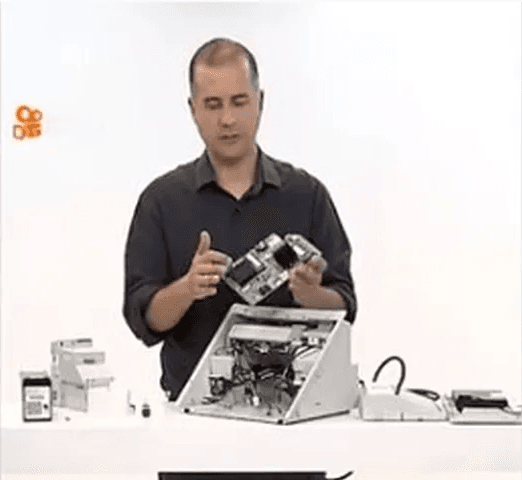
In the same theatrical logic, the TSE staged the physical opening of the electronic voting machine in videos for social media. In June 2022, on Kwai, Electoral Technology coordinator Rafael Azevedo opened the machine and showed parts and functions, in an official campaign one hundred days before the elections. The Court sold the spectacle as transparency and a fight against disinformation.
Opening the casing and filming the components to "prove" there is no fraud is like physically opening a brain to claim it has no bad thoughts. Exposed hardware does not reveal the software running on election day, nor the media preparation chain, nor the totaling. The voter sees plastic and circuit boards. He remains outside what matters.
Source: TSE, "For the first time, an electronic voting machine will be opened on a social network"
As long as the line is "we have already verified it 39 times," the question remains: verified what, under which restrictions, and can a citizen repeat the test on his own?
The question Brazil needs to ask
More than 215 million Brazilians are forced to trust a single chain of command: vote totaling in a room controlled by the TSE, under Júlio Valente's STI. In the early hours Flávio Bolsonaro denounced, PL monitors were reportedly removed from the vault room. The whole country watched what was described as a "little pause" in the count. This time the silence and the delay came early, with the machine already holding most of the vote flow.
Why must Brazil close its eyes and swallow, as dogma, the professionalism and impartiality of a secretary who has already shown, in public posts and in the social circle he moves in, open aversion to Bolsonaro and to the right? Why does the count of the election rest entirely in the hands of this man and the team he chooses? Why should the technical partnership with the Moraes, Fachin and Barroso axis, the same axis that appointed him and later used an STI opinion to fine those who dared to question the voting machines, be treated as sacred neutrality?
As long as totaling is the black box of an ideologically marked team, with opposition monitors outside the room and a pause in the count in full view of the whole country, the question is not one of etiquette. It is about the sovereignty of the vote: who holds the totaling button, in whose service, and why can a citizen not audit the result on his own with a ballot in hand?
And what if the fraud comes from inside? In 2018, when an outside intruder got in, the traces vanished: a source code server with no logs, records lost during maintenance, the Federal Police left with no additional data. The TSE called it an accident. Bolsonaro called it erasure. Under either reading, the investigation was left blind. If someone inside loads different software and erases the trail "by accident," how would anyone know?
We cannot forget everything we have already lived through. Remembering the past is essential to prepare a better future.
Tags: Julio Valente, TSE, Flavio Bolsonaro, Smartmatic, Alexandre de Moraes, 2026, Brazil elections 2026, Electronic voting machines, Vote totaling, PL, Edson Fachin, Luis Roberto Barroso, Giuseppe Janino, Open Society, George Soros, Mark Malloch-Brown, Felipe Neto, Instituto Vero, Disinformation